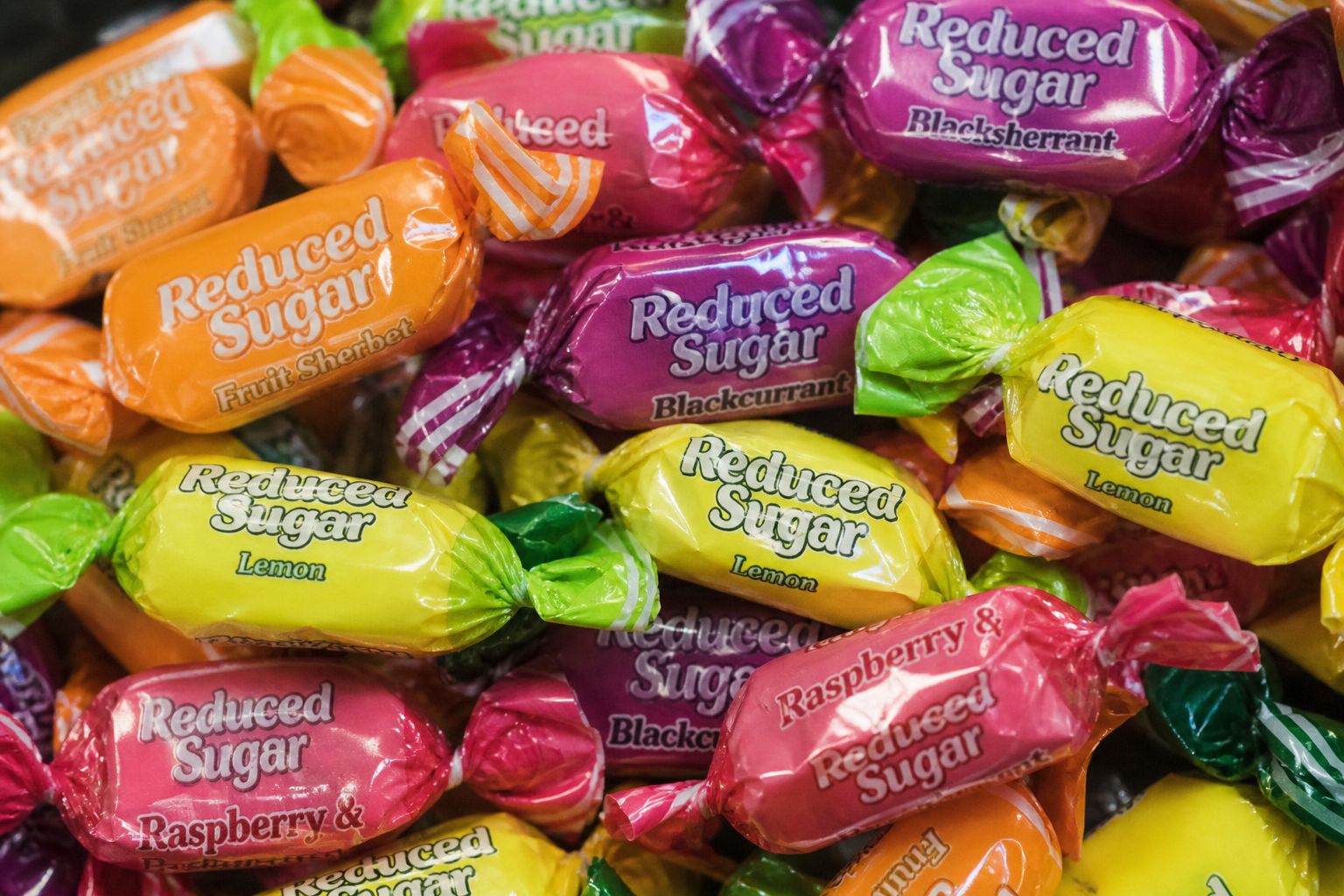
Pick up almost any packaged food in a supermarket and turn it over. Find the sugar line. Look at the number.

Now tell me: is that number good or bad?

If you hesitated, you are not confused, you've been paying attention. Because the sugar number on a nutrition label is one of the most context-dependent figures in the entire panel, and the label gives you almost none of that context. It gives you a gram count. It does not tell you where the sugar came from, what else arrived with it, whether it was added during manufacturing or present in the original ingredient, or how your body is likely to respond to it. It just gives you the number and leaves you to figure out the rest.

Most people cannot figure out the rest. Not because they are not trying, but because the information they need to do so is either missing from the label, obscured by front-of-pack claims, or requires a level of nutritional literacy that most of us were never taught.

This post is about closing that gap and about why the sugar number, read correctly, is one of the most revealing things on any label.
- The claim on the front and the reality on the back
- Natural sugar versus added sugar and why the distinction is more complicated than it appears
- What the sugar number is actually measuring and what it is not
- How to read the sugar number correctly
- A note on what “low sugar” on a label is usually not telling you
- The Sugar Index
- Join the Newsletter
The claim on the front and the reality on the back
Before getting into what the sugar number means, it is worth spending a moment on what it is made to appear to mean — because the gap between the two is where most label confusion originates.
Consider a hypothetical bottle of fruit juice. On the front, in prominent typography, a claim: 50% less added sugar than our original formula.
This claim is almost certainly true. If the original formula contained 5 grams of added sugar per serving and this version contains 2.5 grams, the mathematics check out. Fifty percent less. Technically accurate.
Now consider what that claim is actually telling you.
The absolute reduction is 2.5 grams of sugar — approximately 10 calories. In the context of your total daily dietary intake, this is nutritionally invisible. It will have no measurable effect on your blood glucose response, your satiety, your energy levels, or any other outcome you care about. The reduction is real. Its significance is essentially zero.
But the claim does something more interesting than simply overstating a trivial reduction. It directs your attention specifically toward added sugar — and by doing so, directs it away from the natural sugar that was already present in the fruit juice and constitutes the vast majority of its sugar content. The product may have reduced its added sugar by half. It has not reduced, and cannot reduce, the natural sugar inherent to fruit.
And here is where the label stops helping you entirely — because on most nutrition labels, natural and added sugar are either not separated at all, or separated in a way that is easy to miss. The total sugar figure captures both. The front-of-pack claim highlights only one. The impression created is of a low-sugar product. The reality, visible only if you do the arithmetic on the back panel, may be quite different.
This is not an edge case. It is standard practice across a significant portion of the packaged food industry. The front of the pack is a marketing surface. The back of the pack is where the information lives. They are not always telling the same story.
Natural sugar versus added sugar and why the distinction is more complicated than it appears
The natural versus added sugar distinction is real and meaningful in some contexts. In others it is a distraction from a more important question.
The meaningful context: a product whose sugar is entirely naturally occurring in a whole food ingredient — lactose in plain yoghurt, for example — is nutritionally different from a product with the same sugar count that comes from added sucrose. The yoghurt’s sugar arrives with protein, fat, and other nutrients that affect how it is processed. The added sugar product often does not.
The misleading context: fruit juice.
Fruit juice presents the most common and most misunderstood version of the natural sugar problem. The sugar in fruit juice is natural — it came from fruit. It was not added during manufacturing. And yet, in terms of how your body responds to it, the natural origin is almost entirely irrelevant. Here is why.
In a whole piece of fruit, the sugar — fructose and glucose in varying ratios depending on the fruit — arrives packaged within a complex physical structure. Think of it this way: a whole piece of fruit is like a present wrapped in five hundred layers of complex packaging. To get to the gift inside, your body has to unwrap every layer — physically breaking down the fibre matrix, the cell walls, the structural components of the fruit — and that unwrapping process takes time, costs digestive energy, and most importantly, controls the rate at which the sugar inside becomes available. The sugar is released slowly, gradually, across the full duration of that unpacking process. Your blood glucose rises gently. The response is measured.
Fruit juice is the same present delivered completely bare. No packaging. No layers to work through. The sugar that was locked inside five hundred layers of fibre and cell structure has been liberated entirely by the juicing process. Your body receives it directly, recognises it immediately, and absorbs it at full speed. There is no fibre present to slow the rate of delivery. The blood glucose response is rapid and significant — comparable, in most research, to the response produced by an equivalent amount of added sugar in a soft drink.
The sugar in fruit juice is natural. It is also, in the absence of the fibre that gave it context, metabolically similar to the sugar it is commonly assumed to be categorically different from.
This is why a glass of fruit juice scores approximately 2 on the Sugar Index — the same range as cola — despite being sold as a health product. The score does not care whether the sugar was added or naturally occurring. It measures the total sugar per 100 kcal. And on that measure, juice and cola are in the same neighbourhood.
What the sugar number is actually measuring and what it is not
The Sugar Index, and the sugar line on any nutrition label, measures declared total sugar relative to caloric content. It is measuring one specific thing: how much sugar is present per calorie of food.
It is not measuring blood sugar impact directly. It is not measuring glycaemic index or glycaemic load. It is not measuring insulin response. These are related variables that depend on additional factors — fibre content, protein content, fat content, the specific type of starch present, cooking method — that the sugar number alone cannot capture.
This is the point at which white rice enters the conversation.
White rice scores 100 on the Sugar Index. It contains negligible declared sugar. And yet white rice has a well-established reputation for producing a significant blood glucose response — one of the highest glycaemic responses of any common food.
Both of these things are true simultaneously and they are not contradictory. White rice contains almost no sugar. Its glycaemic impact comes from rapid starch digestion — starch that breaks down into glucose during digestion but is not classified as sugar on the nutrition label. The Sugar Index measures sugar. It does not measure starch digestion rate. A score of 100 on the Sugar Index means this food contains negligible sugar. It does not mean this food has a negligible effect on blood glucose.
This is not a flaw in the index. It is an honest acknowledgment of what any single metric can and cannot tell you. The Sugar Index is one lens. Starch digestibility is a different lens. The relationship between fibre and the blood glucose response to both sugar and starch is the lens being developed in the Sugar Buffer Index — currently in the research phase — which will eventually combine sugar and fibre into a composite score that addresses this more completely.
For now, the Sugar Index tells you what it tells you clearly and accurately. Use it for that, and know where it stops.
How to read the sugar number correctly
Given everything above, here is what a correct reading of the sugar line actually involves.
First, calculate sugar per 100 kcal rather than reading grams per serving. The per-serving figure is subject to serving size manipulation — a product can appear low in sugar simply by defining its serving as an implausibly small quantity. Per 100 kcal removes that distortion.
Second, ignore the front-of-pack sugar claim entirely until you have looked at the back panel number. Percentage reductions, “less sugar” claims, “natural sugar” designations — none of these tell you what the actual sugar figure is. Read the actual figure. Then assess the claim against it.
Third: distinguish between products where sugar is the primary caloric contributor and products where it is incidental. A food where most calories come from protein and fat — plain dairy, nuts, eggs, meat — may have a moderate sugar figure that is nutritionally irrelevant because sugar is a minor part of what the food is doing calorically. A food where most calories come from carbohydrates — a packaged snack, a sweetened drink, a cereal product — and where the sugar figure is significant deserves considerably more attention.
Fourth, use the Natural Food versus Packaged Product toggle in the calculator. The same sugar score means different things depending on what you are evaluating. A mango scoring 40 and a flavoured cereal bar scoring 40 are carrying the same sugar per calorie, but the mango’s sugar arrived with fibre, water, and micronutrients that change the context entirely. The calculator adjusts the interpretation accordingly.
A note on what “low sugar” on a label is usually not telling you
There is a version of low-sugar labelling that is genuinely informative: a product that is low in sugar because it is built from ingredients that do not contain much sugar, like plain dairy, plain nuts, or lean protein. These products score well on the Sugar Index and the label claim reflects something real.
There is another version that is low in sugar because sugar has been replaced with something that produces a similar sensory experience — artificial sweeteners, sugar alcohols, high-intensity sweeteners — without contributing to the declared sugar figure. These products can score well on the Sugar Index while presenting their own set of questions around gut response, appetite signalling, and microbiome effects that the sugar number does not address. The ingredient list is where those questions get answered.
And there is the version illustrated by the hypothetical fruit juice — low in added sugar, perhaps genuinely so, while the total sugar picture tells a different story. The claim is technically accurate. The impression it creates is not.
The Sugar Index does not solve all of these problems. It solves the most important one: it tells you, consistently and comparably across any food you evaluate, what the actual sugar content is relative to its calorie cost. That figure, combined with the natural versus packaged context and a quick check of the ingredient list for added sugar aliases, gives you a substantially more complete picture than the front of the pack ever will.
The Sugar Index
The Label Brief’s Sugar Index scores any food on a 0 to 100 scale based on sugar per 100 kcal, inverted so that lower sugar scores higher. A food with no sugar scores 100. Pure sugar scores 0.
The scale uses a sigmoid curve — deliberately chosen because sugar’s nutritional significance is not evenly distributed across the spectrum. At the low end, small differences between naturally low-sugar whole foods are minor and the curve treats them as nearly equivalent. The steepest part of the curve sits around 10 grams of sugar per 100 kcal — the approximate boundary between naturally occurring sugar in whole foods and added sugar territory in processed products. Above that point the curve becomes increasingly aggressive, reflecting the genuine escalation in metabolic concern as sugar content rises.
The Natural Food versus Packaged Product toggle at the top of the calculator sets the interpretive context before you enter any values. It does not change the score. It changes what the score means — which, for sugar more than any other macro, is the more important variable.
Three notes are built into the calculator.
An excellent note above a score of 75 confirms low sugar content in the appropriate context.
A moderate note between 35 and 54 prompts an ingredient list check for added sugar in packaged products, and notes the sugar content measurement-only framing for natural foods. A poor note below 25 flags high sugar content with different framing for natural foods, where the fruit juice explanation applies, versus packaged products, where the dominant caloric contributor observation applies.
The calculator takes total sugar in grams and calories in kcal from the label in label mode, or sugar per 100 kcal directly in quick mode.
Use it on the next product that makes a sugar claim on the front of the pack. Calculate what the claim is actually telling you. Then look at what the score tells you. The gap between the two is usually where the most useful information lives.
The Sugar Index calculator is in the Standards section, alongside the Protein, Fat, Fibre, and Volume indexes.
Join the Newsletter
Get the newest notes delivered to your email
.
SenT Only when there’s something worth sharing

the author

Mimi
founder
I experiment with building smarter eating habits that are relatively easy to implement and meant to help people feel better day to day and for the long-term.
Leave a Reply to Why healthier versions of everyday foods remain scattered instead of the default – The Label Brief Cancel reply