The Label Brief
Healthy eating made realistic

EATING BETTER SHOULDN’T BE THIS HARD
… and it is hard when labels are not comparable.
The MISSION
Making healthy eating clear and realistic
The Label Brief converts nutrition labels into comparable metrics—so food can be evaluated, not guessed.
- Compare products across protein, sugar, fibre, fat, and volume
- See trade-offs instantly
- Remove marketing distortion
THE PROBLEM
Eating well in today’s food environment has become unnecessarily complicated
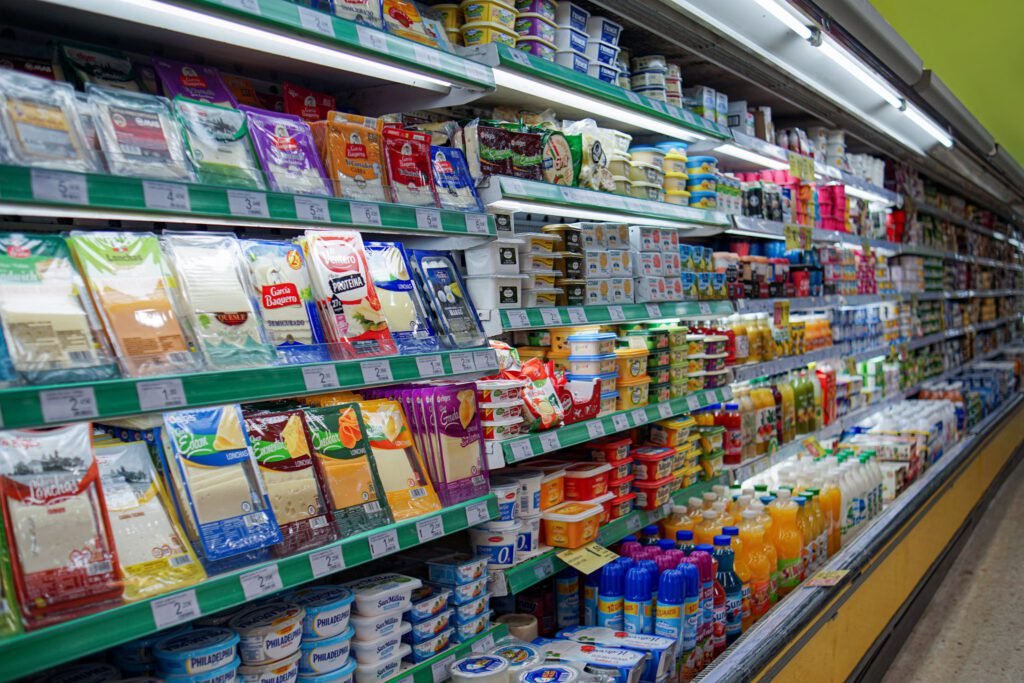
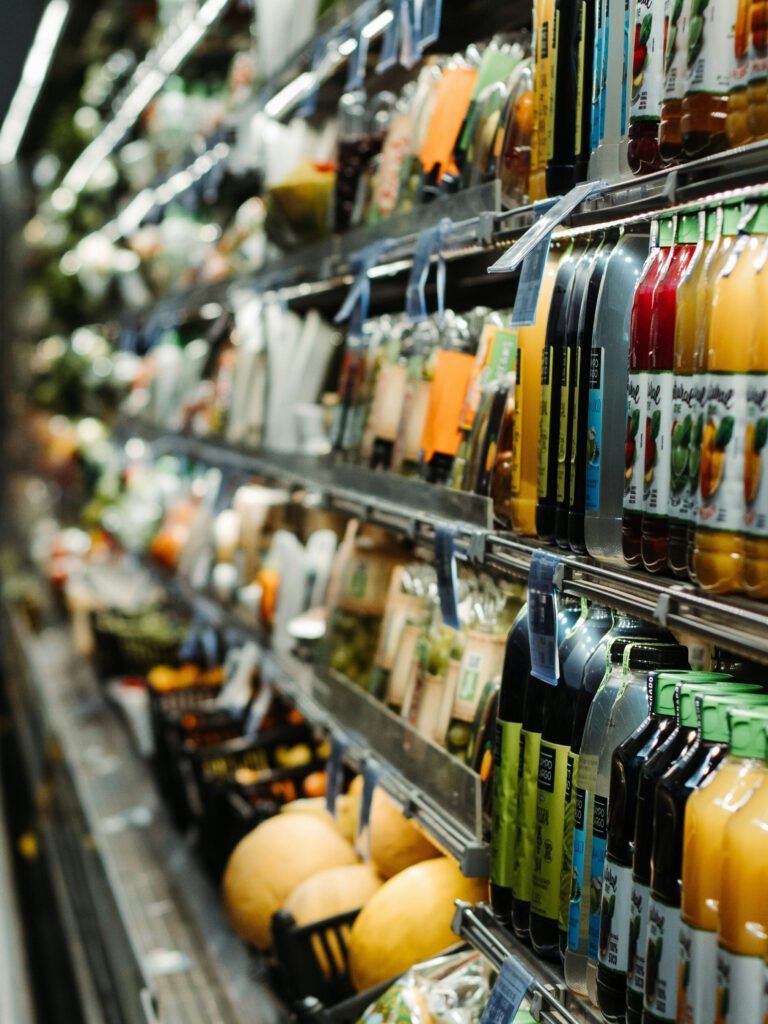
In modern urban environments, we are surrounded by more food choices than ever before. Yet making healthy decisions often feels harder, not easier. Supermarkets, convenience stores, delivery apps, and marketing claims constantly compete for attention, turning everyday food decisions into confusing ones.
Many of us want to eat better. What we lack isn’t motivation – it’s clarity.
Do you recognize this moment?
You’re standing in a supermarket aisle, surrounded by a million options, thinking:
- “Is this actually healthy?”
- “What does high protein really mean?”
- “Is low carb better?”
- “Why does everything say ‘reduced sugar'”?
- “I just want to eat better – why is this so confusing?”
- “Oh god, I’ve been standing here for over 20 minutes!”
You’re not alone
Labels are not standardized for comparison:
- serving sizes vary
- claims are relative
- density is hidden
This confusion isn’t a personal failure. It’s a result of how the modern food landscape is designed.
How to Understand and Use this Site
The Label Brief is built around a simple idea
Food becomes easier to evaluate when it can be compared.
Most nutrition labels are not designed for comparison. Serving sizes vary. Claims are relative. Important trade-offs are hidden.
So instead of asking you to interpret everything manually, The Label Brief provides a system that does this for you.
The Indexes
At the core of the site are the Indexes.
These are simple calculators that convert nutrition labels into comparable values across five dimensions:
- Protein
- Fat
- Fibre
- Sugar
- Volume
By standardising how food is measured, the Indexes make it possible to:
- Compare products directly
- Identify meaningful differences (not just marketing claims)
- See trade-offs clearly, instead of guessing
Use them when you want a quick, grounded answer to a simple question:
“Is this actually a good option compared to something else?”
HOW TO USE THEM
- Enter the values from a nutrition label
- View the calculated index
- Compare across products or categories
You don’t need to track everything or optimise perfectly.
The goal is simply to make decisions clearer, faster, and more consistent.
The Journal
The Journal exists to support the system.
It explains the ideas behind the Indexes, explores edge cases, and breaks down patterns you’ll start to notice when using them.
If something feels unclear, or you want to go deeper, that’s where to look.
IN PRACTICE
You don’t need to “learn everything” before using the site.
Start with a product you’re already curious about.
Run it through an Index.
See what changes when you compare it to something else.
Clarity builds from there.
FROM MACROnutrients TO COMPARISON
Food is built from a small number of fundamental components:
protein, carbohydrates, and fat — often referred to as macronutrients (often “macros” for short).
These determine how filling a food is, how much energy it provides, and how it fits into your day.
But while the components themselves are simple, the way they appear on labels is not.
In practice, macros are difficult to use directly:
- serving sizes vary from product to product
- values are presented in isolation, without context
- claims like “high protein” or “reduced sugar” are relative, not absolute
This makes it hard to answer even basic questions:
Is this actually high in protein — or just marketed that way?
Is the sugar meaningfully low — or only slightly reduced?
Will this keep me full — or not?
Making Macros Comparable
The Indexes exist to resolve this.
They take the macronutrient information already present on a label and convert it into standardised, comparable values across key dimensions:
- Protein
- Fat
- Fibre
- Sugar
- Volume
By putting different foods onto the same baseline, the Indexes make it possible to evaluate them directly — not in isolation, but relative to each other.
WHAT THIS CHANGES
Instead of interpreting labels piece by piece, you can:
- Compare products on a like-for-like basis
- See trade-offs between nutrients clearly
- Filter out marketing language and focus on structure
- Make faster decisions without second-guessing
The goal is not to optimise perfectly or analyse everything. It is simply to make the underlying structure of food visible so that decisions which once felt uncertain become straightforward.
Who is this for?
The Label Briefs is for you if
…you want to make sense of food without overthinking it, but also without relying on guesswork.
More specifically, it’s for you if you’ve ever found yourself:
- Comparing two products and not knowing what actually makes one better
- Questioning claims like “high protein” or “reduced sugar”
- Trying to understand whether something will keep you full — or not
- Wanting a quick, grounded way to evaluate food without reading five articles first
IN PRACTICE
You don’t need to follow a diet.
You don’t need to track everything you eat.
But you do want a way to answer simple questions more reliably:
- Is this a meaningful source of protein?
- Is the sugar content actually low — or just lower?
- How does this compare to other options I could choose instead?
You don’t need expertise.
You don’t need to do any maths.
You just need a label and a question.
The Calculators handle the rest.
What The Label Briefs is NOT
THE LABEL BRIEFS is NOT
⬩ A crash diet
⬩ A restrictive food philosophy
⬩ A space for food guilt
⬩ A place that tells you what you “should” eat
⬩ Medical or legal advice (please see the disclaimer for details)
There are no rules to follow here.
No perfection required.
No pressure to overhaul your life overnight.The Label Brief exists for one reason:
to make eating well simpler, clearer, and easier to navigate in real life.
Think of it as a tool – not a doctrine.
Use what helps.
Ignore what doesn’t.
Join the Newsletter
Get the newest notes delivered to your email
.
SenT Only when there’s something worth sharing